What Makes a Food Super? — The Science Behind Superfoods
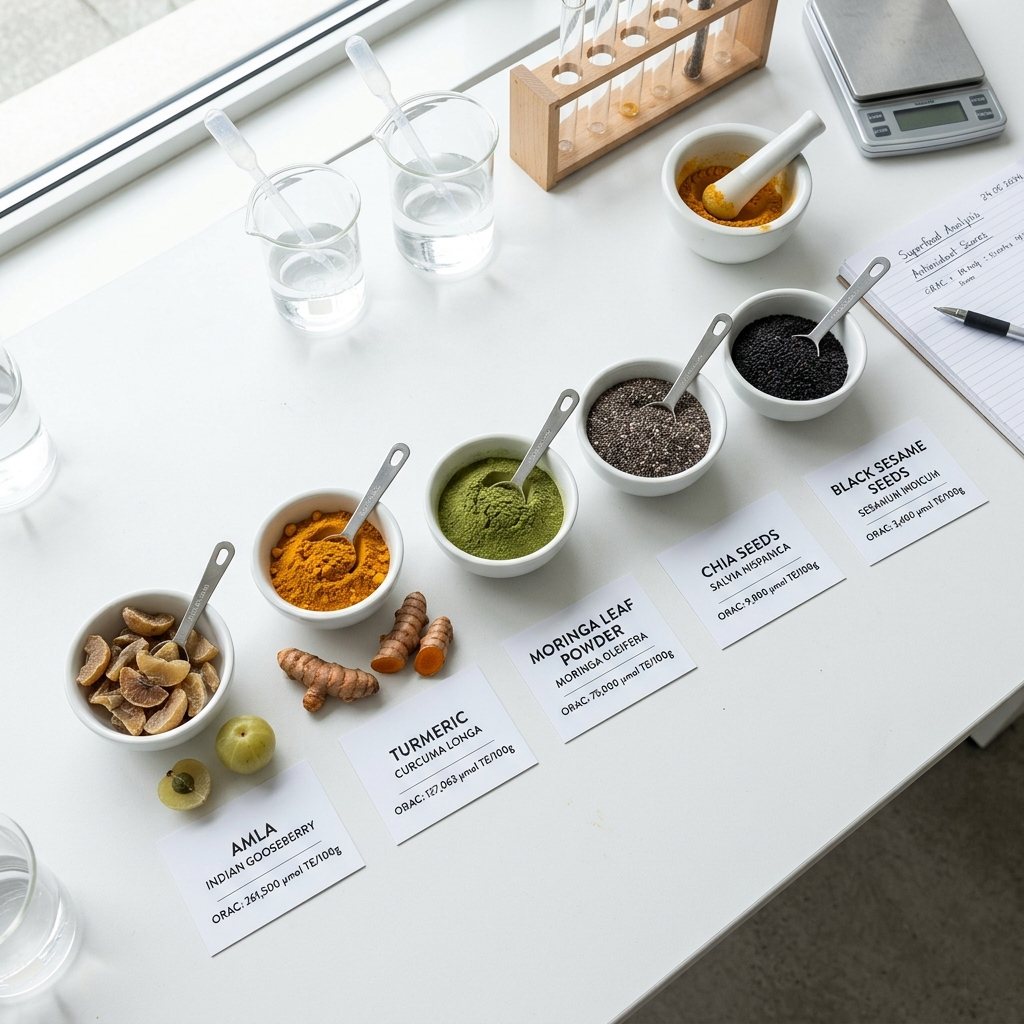
The term superfood appears on everything from acai bowls to protein bars. But strip away the marketing and ask: what actually makes a food “super”?
The answer lies in nutrient density — the ratio of beneficial nutrients to calories. A food is genuinely super when it delivers an outsized concentration of vitamins, minerals, antioxidants, or bioactive compounds relative to its caloric load.
How Scientists Measure “Super”
ORAC Score (Oxygen Radical Absorbance Capacity)
ORAC measures a food’s ability to neutralise free radicals — unstable molecules that damage cells and accelerate ageing. Higher ORAC = more antioxidant power.
- Amla (Indian gooseberry): 261,500 ORAC — one of the highest scores ever recorded
- Cloves: 290,283 ORAC
- Raw cacao: 95,500 ORAC
- Goji berries: 25,300 ORAC
- Blueberries: 4,669 ORAC
Nutrient Density Index
This measures how many essential nutrients a food provides per calorie. Moringa scores exceptionally high because 100g delivers 92 distinct nutrients while containing only 64 calories.
Real Superfoods vs Marketing Superfoods
- Real: Moringa, amla, turmeric, chia seeds, black sesame — backed by clinical studies and centuries of use
- Overhyped: Many “superfood” granola bars, juices, and powders that contain trace amounts of the marketed ingredient alongside sugar and fillers
The EFIVE Standard
When we call something a superfood, we mean: high ORAC score, clinically studied benefits, single-ingredient purity, and organic certification. No marketing inflation. Just measurable nutrition.
A true superfood does not need a marketing budget. Its nutritional profile speaks for itself.
Why This Matters
Real nutrition comes from real food — unprocessed, single-ingredient, and sourced with integrity. Every product in our range meets this standard.
Premium Organic Seeds, Nuts & Superfoods
Chia seeds, pumpkin seeds, flaxseeds, cranberries, and more — pure, organic, nutrient-dense.
Shop Superfoods